 DOMUS GLOBAL
A listing mentions czynsz, the lease mentions kaucja, and the key handover involves a protokół. These words refer to different obligations. This glossary explains 43 terms used in residential rental agreements, settlements and correspondence in Poland.
These definitions provide general information. The tenancy type, contract terms, dates and special legislation matter in an individual case. Occasional and institutional tenancies differ from ordinary residential tenancies; a document’s title alone does not determine its legal effect.
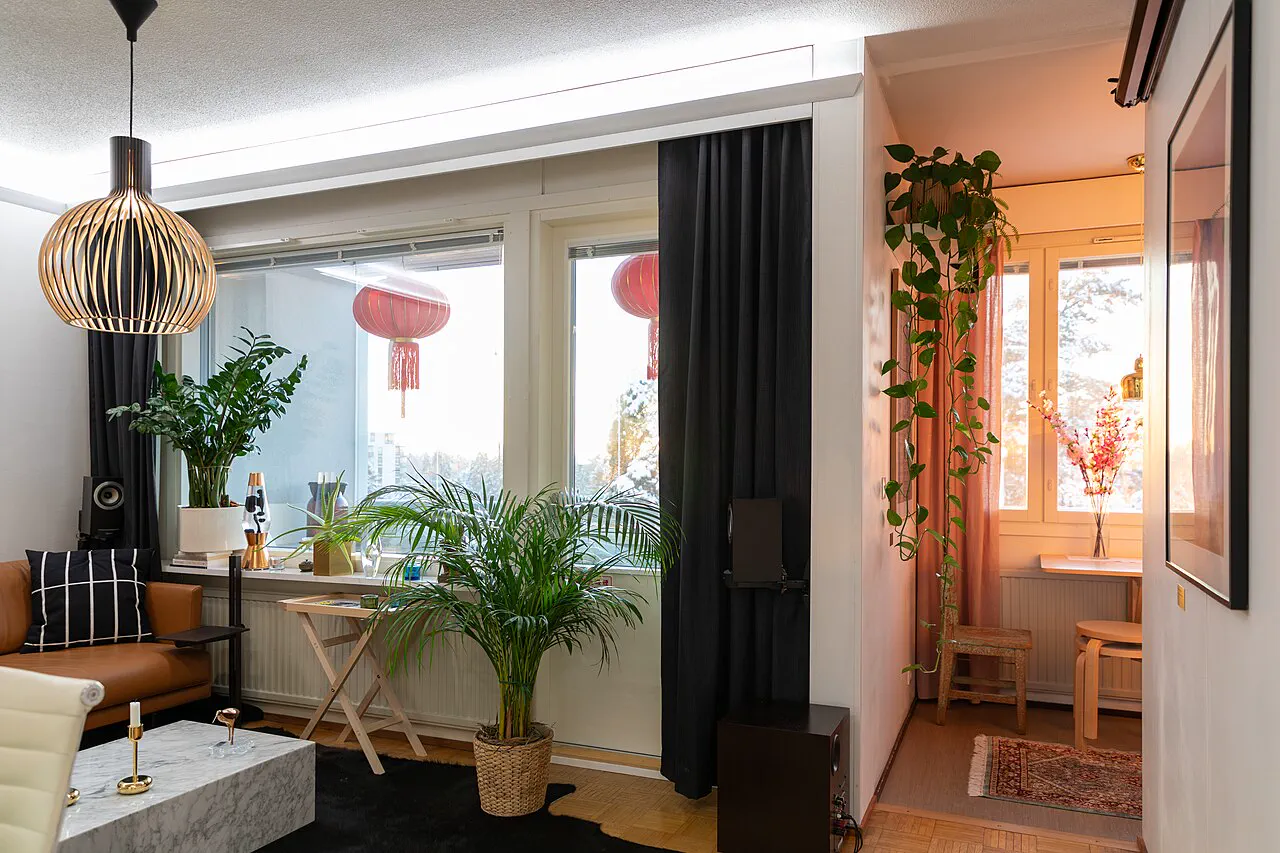
Photo details
Illustrative photograph: a studio apartment in Finland, not a DOMUS GLOBAL rental listing.Aaaatu / Wikimedia Commons · CC BY-SA 4.0

Money and charges
- Czynsz — Payment for use of the home. Listings sometimes use the same word for building charges, so ask for a breakdown of the total amount.
- Czynsz najmu — Rent payable to the landlord. Check whether the agreement separately lists building charges, utilities, parking and other services.
- Czynsz administracyjny — An informal name for building and apartment charges. It is not one fixed statutory fee: check the components, advance payments and contractual allocation to the tenant.
- Opłaty eksploatacyjne — Operating and maintenance costs. Ask for a current statement and identify which items are included in the tenant’s agreed payment.
- Media — A general term for utilities such as water, electricity, gas and heating. Internet may be separate. Identify the supplier, payer, advances and final reconciliation procedure.
- Ogrzewanie — Heating and its charges. Advance payments may differ from final costs; check the billing period, fixed components and method of allocating consumption.
- Liczniki — Consumption meters. Record identifiers, readings and the date at handover; a heating cost allocator is different from a heat meter.
- Kaucja — A security deposit. The cap is generally 12 times the monthly rent for ordinary residential tenancies and 6 times for occasional or institutional tenancies, excluding separate service charges. It is refundable within one month of vacating, less valid deductions, with the applicable statutory adjustment rules.
- Zadatek — A payment with specific legal consequences under Civil Code Article 394 unless the agreement or custom provides otherwise. It differs from an advance payment; check withdrawal and repayment conditions in writing.
- Zaliczka — An advance towards a future payment. The label alone does not settle every consequence if the agreement is not performed; check its purpose and refund conditions.
- Odstępne — An ambiguous term in listings that may describe different payments. Before paying, establish the recipient, legal basis, what you receive and whether repayment is possible.
- Waloryzacja — Adjustment under specified rules, such as an indexation clause. Check the index, frequency and procedure: publication of a GUS inflation figure does not itself amend every lease.
- Odsetki ustawowe — Statutory interest under the Civil Code. Interest on capital and late-payment interest have different bases; identify the type claimed and the relevant period.
Agreements, documents and ending a tenancy
- Umowa najmu — An agreement granting use of property in return for rent. Identify the parties, premises, duration, payments, deposit, use and termination rules. The tenancy type affects documentation and legal protections.
- Najem okazjonalny — A special residential tenancy offered by an individual owner who does not run a residential letting business. It requires a written agreement and statutory attachments, including a tenant’s notarised declaration. Check the conditions and transitional rules for the particular agreement.
- Najem instytucjonalny — A special residential tenancy connected with the landlord’s letting business. It requires, among other things, a written agreement and a tenant’s notarised declaration. Not every agreement with a company is automatically an institutional tenancy.
- Umowa przedwstępna — A commitment to enter into a final agreement on agreed terms. It does not automatically replace a lease; specify the deadline, essential terms and treatment of payments.
- Protokół zdawczo-odbiorczy — A record of condition and equipment wear. Ordinary tenancies covered by Article 6c require it before handover as a basis for settlement; check special tenancy rules and the agreement separately. Inventory, readings, keys and photos are practical additions; the report is not the only evidence.
- Wypowiedzenie — A unilateral notice ending an agreement when the relevant conditions are met. Check the legal basis, required form, delivery and notice period; an ordinary message may be insufficient.
- Okres wypowiedzenia — The period between effective notice and the end of the tenancy. There is no single rule for every agreement: Civil Code Article 688 provides three months’ notice ending at month-end for an indefinite premises lease with monthly rent; residential landlords also face statutory restrictions. For fixed terms, check Article 673 § 3 and the agreed grounds for notice.
- Zameldowanie — Administrative registration of actual residence. It does not create ownership or tenancy rights. Missing confirmation from the owner does not always prevent an administrative procedure; documents and deadlines depend in part on the person’s status.
- Oświadczenie o poddaniu się egzekucji — A notarised submission to enforcement of a specified obligation, such as vacating the home. It does not permit self-help eviction: enforcement requires further conditions and an appropriate enforceable title.
- Wezwanie do zapłaty — A demand for payment of arrears. Its content and deadline depend on its purpose; an arbitrary deadline of a few days does not replace the statutory procedure before terminating for arrears.
- List polecony — Registered post, useful for documenting dispatch and receipt. It is not the only legally effective way to give notice; the required form and effective delivery matter.
Parties and property administration
- Wynajmujący — The party granting use of the home for rent. They are not always the owner: verify identity, authority to let and any relevant power of attorney.
- Najemca — The party using the home under the lease and owing the agreed payments. Identify signatories, occupants and how responsibilities are allocated between joint tenants.
- Wspólnota mieszkaniowa — The community of unit owners in a property. It handles common-property matters; signing a tenancy agreement does not itself make the tenant a member.
- Spółdzielnia mieszkaniowa — A housing cooperative managing housing stock or carrying out other statutory tasks. Check the type of right to the apartment and the organisation responsible for billing.
- Zarządca — A person or organisation performing property-management tasks. Authority depends on the legal basis and contract; the manager does not automatically replace the landlord in tenancy matters.
- Administrator — A role concerned with day-to-day building administration. It may overlap with property management; identify the emergency contact and who can authorise financial decisions.
- Pośrednik nieruchomości — A person or firm providing brokerage services. Agree the scope, payer and remuneration in the brokerage agreement; there is no single mandatory commission for every tenancy.
- Komornik sądowy — A court enforcement officer acting on an enforceable title. Enforcement based on a notarial declaration requires an enforceability clause granted by a court and compliance with statutory conditions.
The premises and their fittings
- Lokal mieszkalny — Premises intended for residential use. The agreement should precisely identify the home or part being rented; not every rented apartment has a separate land and mortgage register.
- Pomieszczenie przynależne — An ancillary room legally attached to a unit, such as a cellar or storage room. A parking space does not always have that status; check its legal basis and the access granted.
- Części wspólne — Common-use parts of the property, such as stairs or a lift. Check building rules, access and the contractual allocation of costs.
- Stan deweloperski — A market term for a developer’s finishing standard, without one universal specification. Documents and inspection establish the actual fittings and readiness for occupation.
- Stan pod klucz — A market term meaning “turnkey”. It does not guarantee particular furniture or equipment; obtain an inventory and test the appliances.
- Remont — Repair and refurbishment work. Responsibilities follow legislation and permissible contractual terms; “small repairs for the tenant, large repairs for the owner” does not resolve every case.
Rights, consent and liability
- Tytuł prawny — A legal basis for occupying the home, such as ownership or a tenancy. Check its nature and scope; it is different from residence registration or simply holding the keys.
- Zgoda właściciela — Consent to a particular action where required by legislation or an effective contractual term. Check authority, scope and form; residence registration is not simply a discretionary permission from the owner.
- Podnajem — Granting another person use of rented premises or part of them. Landlord consent is generally required, subject to statutory exceptions; a breach does not permit self-help removal of occupants.
- Siła wyższa — Exceptional circumstances assessed against a particular obligation. Invoking them, or losing income, does not automatically suspend rent; legislation, the agreement and causation matter.
- Ubezpieczenie OC najemcy — Tenant liability insurance within the policy’s terms. Check limits, exclusions, excess and damage to rented property; it does not replace the deposit or automatically insure your belongings.
How to read the total rental cost
“Czynsz + opłaty” does not yet tell you the final cost. Separate the landlord’s rent, building charges and utilities. For each item, establish whether it is fixed, an advance subject to reconciliation or a direct supplier payment. Record the deposit and any brokerage fee separately.
What to check before signing
- The landlord’s identity, authority to let and the scope of any power of attorney.
- The tenancy type and duration, permitted grounds for ending it, required notice form and delivery addresses.
- The full payment schedule, due dates, rent adjustment rules and reconciliation of advances.
- The deposit’s basis, amount, deductions, applicable adjustment and statutory repayment deadline. Do not unilaterally use it as the final month’s rent.
- The condition of the home and equipment, defects, meter readings and number of keys at handover; keep the signed record and photographs.
- Who may occupy the home, subletting, and agreements about pets or alterations. Distinguish these from administrative residence-registration rules.
What happens if the apartment is sold?
A sale does not itself end the tenancy: the buyer generally takes the landlord’s place. The buyer’s ability to give notice requires a separate check. Civil Code Article 678 provides particular protection for a fixed-term lease made in writing with a date certain (data pewna), where possession has already been handed over. Simply typing a date in the heading does not always establish data pewna.
Related DOMUS GLOBAL guides
- Rental handover report: what to check when moving in and out
- Tenant insurance: belongings, liability and your deposit
- Short-term rentals: what guests should check
Legal bases and sources
- Polish Civil Code — including Articles 61, 98–99, 389–394 and 659–688²
- Tenant Protection Act — deposits, repairs, termination and special tenancy types
- Ownership of Premises Act — units, ancillary rooms and owners’ communities
- Gov.pl — residence registration for foreigners
Sources checked on 8 November 2026. Transitional provisions may matter for older agreements.